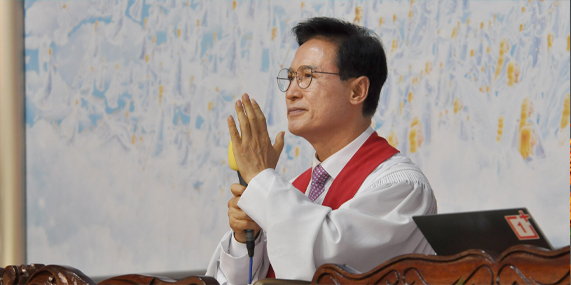
Live with Gratitude for God's Gift
Bible passage: John 7:37-39
“37. On the last and greatest day of the Feast, Jesus stood and said in a loud voice, "If anyone is thirsty, let him come to me and drink. 38. Whoever believes in me, as the Scripture has said, streams of living water will flow from within him." 39. By this he meant the Spirit, whom those who believed in him were later to receive. Up to that time the Spirit had not been given, since Jesus had not yet been glorified."
There is a saying ‘to live like flowing water’. What does this mean? It means to minimize the resistance in the flow of life’s energy. It is a way of saying not to waste energy on unnecessary things and to let life flow naturally like water.
For example, it means to understand that everyone is different and to accept people with personalities different from your own. You should not try to change or force someone to align with your preferences. You should not complain about changes in the world but accept them constructively and respond healthily.
You should listen to others rather than insisting on your opinions, and instead of pointing out flaws or doubting others, trust and respect them. Living in this way is like ‘living like flowing water’, and I think the Bible passage Philippians 4:11-12 corresponds to this idea. It says, “I am not saying this because I am in need, for I have learned to be content whatever the circumstances. I know what it is to be in need, and I know what it is to have plenty. I have learned the secret of being content in any and every situation, whether well fed or hungry, whether living in plenty or in want.” What is contentment? Contentment is a heart that is undisturbed by various external circumstances and enjoys perfect peace, feeling sufficient and satisfied from within.
However, the important thing is that contentment is not something that comes naturally. It must be learned and acquired through effort and practice. That is why Apostle Paul mentions twice in verses 11-12 that he “learned to be content.” Gratitude is the outward expression of a content heart. The Talmud says, “Before you tame your tongue to say ‘Thank you,’ do not let it say anything.” This teaches that gratitude must be learned, acquired, and practiced until one becomes proficient in it. Next Sunday will be Thanksgiving Sunday. To make Thanksgiving Sunday a bit more meaningful and filled with grace, today I will speak under the title “Live with Gratitude for God’s Gifts.” Today, we will look into the Feast of Tabernacles, one of Israel’s festivals mentioned in the Scripture, and through it, we will explore the levels of gratitude. This is because the Feast of Tabernacles in Israel corresponds to today’s Thanksgiving celebration.
1. The lowest level of gratitude is the kind of gratitude exemplified in the Feast of Ingathering.
In today’s scripture passage, we can see three levels of gratitude that we should offer to God in our lives. The festival mentioned here is one of Israel’s three major festivals, the Feast of Tabernacles. John 7:2 says, “Now the feast of the Jews, the Feast of Booths, was near.” In Deuteronomy, Israel’s three major festivals are explained. Deuteronomy 16:16 says, “Three times a year all your men must appear before the LORD your God at the place He will choose: at the Festival of Unleavened Bread, the Festival of Weeks and the Festival of Tabernacles. No one should appear before the LORD empty-handed:” The three major festivals mentioned here are the Feast of Unleavened Bread, the Feast of Weeks, and the Feast of Tabernacles. Since there are only three, it seems simple.
However, while it seems simple, it is also complex. This is because the same festival has multiple names. The Feast of Unleavened Bread can also be called the Feast of Passover, and the Feast of Weeks can also be called the Feast of Pentecost or the Feast of Harvest. The Feast of Tabernacles is also called the Feast of Ingathering. Therefore, the “last and greatest day of the festival” mentioned in today’s scripture (John 7:37) refers to the Feast of Tabernacles mentioned in verse 2, which is also called the Feast of Ingathering.
The second part of Exodus 23:16 says, “Celebrate the Festival of Ingathering at the end of the year, when you gather in your crops from the field.” The Feast of Ingathering mentioned here is another name for the Feast of Tabernacles. Why is it so confusing, with the same festival being called by different names? This is because the Old Testament festivals were originally related to agriculture, and their names were derived from agricultural practices. Looking again at Exodus 23:16, we see that the Feast of Weeks and the Feast of Ingathering are related to farming: It says, “Celebrate the Festival of Harvest with the firstfruits of the crops you sow in your field. Celebrate the Festival of Ingathering at the end of the year, when you gather in your crops from the field.”
The Feast of Weeks commemorates the harvest of the first fruits after sowing seeds, while the Feast of Ingathering is the celebration of storing harvested grain in barns and giving thanks afterward. These festivals also carry the memory of God’s grace in the past. As people reflected on God’s blessings, they gave these festivals new names to honor His grace. The Feast of Ingathering, for example, was a festival celebrated at the end of the year after the final harvest, when the grain was stored in barns. It commemorates the time when their ancestors lived in hardship in the wilderness after the Exodus and remembered how God fed and protected them.
It was thus renamed the Feast of Tabernacles. In today’s scripture (John 7:37), the terms “Feast,” “Feast of Ingathering,” and “Feast of Tabernacles” all refer to the same festival, which corresponds to today’s Thanksgiving celebration. This time, focusing on the different names for what is essentially the same Thanksgiving festival, we will explore the three levels of gratitude from a fresh perspective. If gratitude is something to be learned and practiced rather than simply produced, like a product, then we can think of gratitude as having levels, just as there are higher and lower fields of study. Even with gratitude, there can be shallow gratitude and deep gratitude, less mature gratitude and more mature gratitude. The first and lowest level of gratitude is what we call the gratitude of the Feast of Ingathering. Gratitude is the key to happiness.
However, if we fail to give thanks for the good things we receive, boast about ourselves, or become arrogant, we lose the key to unlocking the grace and blessings we have received. Acts 12:23 tells the story of King Herod's sudden death: It says, “Immediately, because Herod did not give praise to God, an angel of the Lord struck him down, and he was eaten by worms and died.” King Herod was an evil king who persecuted Israel, killed John the Baptist, and committed many wicked and cruel sins. However, the Bible states that the reason for Herod’s death was not his other evil deeds but because he did not give glory to God or offer thanks. Therefore, failing to give thanks is also considered a great sin. The gratitude of the Feast of Ingathering is a situational gratitude - a gratitude for the events or conditions that occur. It is conditional gratitude, given because God has provided conditions for thankfulness.
One day, a father and son were traveling on horseback through a forest. They were on their way to find each other, and after several miles, they finally met joyfully. The son hugged his father with great delight and said, “Father, I am so thankful to God for His grace.” Curious, the father asked why. The son replied, “On my way to find you, my horse stumbled on a tree root three times. But I didn’t get hurt at all! I am so grateful to God.” Hearing this, the father said, “That’s truly something to be thankful for. But let’s also be thankful for this: on my way to find you, my horse didn’t stumble even once. Isn’t that something to be even more thankful for?” From this conversation between the father and son, we can learn an important lesson. Today, we often call this era a time of lost gratitude. Some say they cannot give thanks because there is nothing to be thankful for.
Instead of appreciating what we have, people focus on what they lack, filling their hearts with complaints and resentment. Recovering from a severe illness is not the only thing worth being thankful for. Being healthy and not falling ill in the first place is even more reason for gratitude. Finding something lost is not the only thing worth being thankful for. Being protected from losing it in the first place is even more reason to be grateful. Instead of resenting what we don’t have, let’s be thankful for what we do have. Instead of complaining about not receiving something great, let’s be thankful for keeping what is small. Gratitude for the small things, gratitude for what we already have - this is where happiness begins.
2. The second level of gratitude, which goes beyond the first, is the kind of gratitude exemplified in the Feast of Tabernacles.
This level of gratitude does not stop at simply giving thanks for the harvest during the Feast of Ingathering. It involves remembering and being thankful for the grace God bestowed upon their ancestors - how He protected and provided for them as they crossed the Red Sea and journeyed through the wilderness. The gratitude of the Feast of Tabernacles is not about being thankful for a single event but for the grace and love God displayed throughout the process leading to that event. During the Feast of Tabernacles, the Israelites would make a pilgrimage to the temple in Jerusalem.
On their way, they would live in booths, reflecting on how God fed, clothed, and protected their ancestors in the wilderness from wild animals and foreign enemies. For us, being grateful that our church experienced no major difficulties this year and achieved success in online missions, announced plans for a new sanctuary building, and joyfully celebrated its anniversary, is an example of the gratitude of the Feast of Ingathering. Reflecting on this, I felt deeply moved by God’s overwhelming love and grace throughout the past week, prompting much gratitude. Even with the sudden passing of Bishop Myong-Ho Cheong, God stabilized the church, and despite my lack of familiarity with Kenyan culture and customs, He covered my shortcomings with abundant grace and love.
God has sustained me with the health and vigor of youth even as I age. For all of this, I am deeply grateful to God. Recognizing this is the gratitude of the Feast of Tabernacles. It is not by our wisdom or effort. Everything is the result of God’s grace and care. This applies not only to our church but also to our families. While being grateful for blessings like finding good jobs, expanding businesses, recovering from illnesses, or restoring families is valid, these are surface-level expressions of gratitude.
A deeper, more profound gratitude acknowledges, “By the grace of God, I am who I am.” A story is told of a pastor in Korea who received an email from a heretical group. The email read as follows: “In three years, we will bring you down. Of all the people we have targeted so far, none have resisted. No matter what, we will bring you down.” Initially, the pastor felt a chill and tension, even a hint of fear. But soon, the tension lifted, and the fear dissipated. He reasoned that if this group truly intended to bring him down, he would become more cautious, ensuring his words and actions were above reproach. He resolved to live more truthfully and devoutly, thinking this would not harm him but actually benefit him. Why did David fall? Was it because of Goliath?
Was it because of King Saul, who persistently sought to kill him? No, ironically, David fell not because of Goliath or Saul but because they were absent. When David committed adultery with Bathsheba and planned Uriah’s murder, he was in a period of great stability, where his power was unchallenged, and no one could oppose him. It was this complacency that led to his downfall. Our "Goliaths" are not threats to us. Even "King Sauls" are not unnecessary adversaries. These challenges can become reasons for gratitude.
This is the gratitude of the wilderness, the gratitude of the Feast of Tabernacles. Like that pastor, we should live with the assumption that someone may be trying to bring us down. With this perspective, we can stay vigilant, live devoutly, pray fervently, and walk in truth, which is the wise way to live. The Bible tells us in 1 Peter 5:8 that the enemy, the devil, prowls around like a roaring lion, seeking someone to devour. Didn’t Daniel give thanks to God even in such circumstances? Daniel 6:10 says, “Now when Daniel learned that the decree had been published, he went home to his upstairs room where the windows opened toward Jerusalem.
Three times a day he got down on his knees and prayed, giving thanks to his God, just as he had done before.” The Apostle Paul also gave thanks, even though he had a thorn in his flesh. Though he prayed three times for its removal and received no answer, he declared, “When I am weak, then I am strong,” and expressed gratitude. 2 Corinthians 12:9 says, “But He said to me, “My grace is sufficient for you, for My power is made perfect in weakness.” Therefore I will boast all the more gladly about my weaknesses, so that Christ’s power may rest on me.” This is the gratitude of the Feast of Tabernacles. Let us not remain at the level of the gratitude of the Feast of Ingathering but aspire to the higher, spiritual level of gratitude exemplified in the Feast of Tabernacles. May this Thanksgiving season be one where we offer deeper and more meaningful gratitude.
3. The third and highest level of gratitude we should reach is the kind of gratitude described in John 7:37.
The verse itself is full of grace, but understanding its background makes it even more moving. The Feast of Tabernacles lasts for a week, and during this time, two main rituals were held in the priests' courtyard for pilgrims visiting the Jerusalem temple. The first is the water-pouring ritual, known as the libation ceremony. During the Feast of Tabernacles, the high priest, priests, and pilgrims would draw water from the Pool of Siloam and pour it on the altar.
The purpose of this water-pouring ritual was to pray for the blessing of the early rains that were needed before the Feast of Tabernacles. When the procession carrying water from the Pool of Siloam entered the priests’ courtyard, the priests would blow silver trumpets and sing hymns inspired by Isaiah 12:2-3. Isaiah 12:2-3 says ““Surely God is my salvation; I will trust and not be afraid. The LORD, the LORD himself, is my strength and my defense; He has become my salvation.” With joy you will draw water from the wells of salvation.” Carrying jars of water, they would walk toward the altar, singing this song. The second ritual involved placing willow branches around the altar and reciting prayers. These willow branches were brought from the village of Motza, southwest of Jerusalem, where willows grew abundantly.
Willows were used because they wither and die quickly without water, and these branches were placed near the altar. As they looked at the willow branches, which would wither and dry without water, pilgrims would walk around them and recite the prayer from Psalm 118:25 which says, “LORD, save us! LORD, grant us success!” Through this ritual, they pleaded, “Just as the willow trees wither and die without water, so too do our lives falter without it. Please grant us Your grace, LORD.” Why did Jesus deliver His message about the rivers of living water on the last day of the Feast of Tabernacles? This was the most fitting moment to reveal who He was and how He gives life through the Holy Spirit. On the last day of the feast, Jesus stood near the altar and cried out: “If anyone is thirsty, let him come to Me and drink. He who believes in Me, as the Scripture said, ‘From his innermost being will flow rivers of living water.’”
Imagine this scene: a crowd gathered for the feast, participating in rituals, while Jesus made this profound declaration. Why did He speak such strange words at that moment? The people were devoutly performing religious rituals, but they failed to recognize the true source of living water. Jesus lamented over their ignorance. They fetched water from the Pool of Siloam, poured it on the altar, and watered the willow branches to prevent them from withering. Yet, they did not understand that this water symbolized the Holy Spirit. They were caught up in ceremonies and rituals, missing the deeper spiritual truth. Jesus’s cry was a plea for them to seek not just physical water but the living water of the Holy Spirit, which alone could transform their withered lives into vibrant ones. If we understand the heart of Jesus, we should strive to let rivers of living water flow through our church.
As I have often said, we must make our church a place where the "Upper Room of Mark" revival flows abundantly. During Daniel's prayer meetings, living water should overflow, and in every worship service, the Holy Spirit should flow freely like streams of life. In Kenya, the rainy season is bringing heavy rain. While I am concerned about our members avoiding flood damage, I also hope that the spiritual rain of the Holy Spirit will pour down on us during our prayer meetings, soaking us with His grace. The gratitude described in John 7:37 is the gratitude for the gift of the Holy Spirit. As Jesus prepared to leave this earth, He made a promise to send the Helper, the Holy Spirit, to us. The Greek word for the Holy Spirit, Parakletos, means "one who comes alongside to help."
The Holy Spirit is not distant but is by our side, holding our hands, always with us. There is a story of a heart patient preparing for surgery. The night before, a nurse visited the patient to explain the procedure: “During the surgery, your heart will be detached from your body, and your life will be sustained solely by machines. After the surgery, for six hours, you will not be able to move, see, or speak.” Hearing this, the patient grew anxious. But the nurse held the patient’s hand and reassured him: “Don’t worry. I will stay by your side, holding your hand, just as I am now. I will monitor every risk, record every occurrence, and take all necessary actions to ensure your safety.”
During the surgery, the patient felt the nurse’s warm, reassuring hand, even in his most critical and vulnerable moments. This brought him immense comfort and peace, helping him recover successfully. The most noble form of gratitude during the Feast of Tabernacles is to recognize and thank the Holy Spirit, who comes alongside us, holds our hands, and prevents our lives from withering like the willow branches. Just as Jesus proclaimed, “Whoever believes in Me, rivers of living water will flow from within them,” may the living water of the Holy Spirit overflow in your hearts and become a river in your lives. May this living water wash away all worries and anxieties, leaving behind only gratitude in this season of Thanksgiving.
4. Realize that life is a gift from God and live every moment with gratitude.
When we accept Jesus Christ as our Savior and receive the Holy Spirit as a gift, we must recognize that our entire life is God’s gift. Ecclesiastes is like a treatise on life, discussing what life is all about. King Solomon, the author of Ecclesiastes, initially saw life as meaningless and vain, but later came to understand it properly and said: Ecclesiastes 3:12-13, “I know that there is nothing better for people than to be happy and to do good while they live. That each of them may eat and drink, and find satisfaction in all their toil—this is the gift of God.” Solomon realized that during a person’s life, there is nothing better than to do good, to eat and drink, and to understand that all of this - living itself - is a gift from God. Indeed, we must acknowledge that our entire life is a gift from God. God desires for us to enjoy life happily and to use it for His glory.
Though life may feel meaningless, mysterious, and fleeting like a vapor, we must cherish it as God’s gift, treasure it, and live joyfully. This is the “life assignment” God has given to all humanity. Just as a teacher assigns homework at school, which we complete and submit the next day for inspection, God has given us a life assignment to work on until the day we die. And what is this assignment from God? It is to cherish life as the gift it is, to live with joy and gratitude, and to bring delight to God. A pastor who had immigrated to Canada and ministered there passed away at the age of 85. The day before his passing, his family gathered around his bedside to hold a farewell worship service. After the service, his children asked, “Father, do you have any last words for us?” Using his last ounce of strength, the pastor said, “I have no more desires on this earth. Lord, I am happy.”
He was a person who lived life as the gift from God it was. We too should strive to live such a life, seeing it as God’s precious gift. Beloved congregation, to finish life and confess, “Lord, I am happy and thankful,” is not something anyone can do easily. With the resources God has given us in life, let us pray, “God, let my life be a giftlike life You have given me,” and as we work on this life assignment with diligence and effort, may we all reach the end of our lives able to say, like that pastor, “Lord, I am happy.” To live life as the gift from God it is, we must live every day and every moment with gratitude. There is a famous phrase, “Carpe Diem.” This phrase, first used by the Roman poet Horace in his works, means “Seize the day” or “Be faithful to the present moment you are living.” It urges us to grasp this moment and cherish it. Horace wrote this to comfort Romans who had experienced terrible wars and were filled with fear and sorrow, encouraging them to cherish each day.
In a similarly bleak society, we must revive a movement of gratitude. To live life as the gift God has given us, we must restore the practice of gratitude. Psalm 118:28-29 says, “You are my God, and I will praise You; you are my God, and I will exalt You. Give thanks to the Lord, for He is good; His love endures forever.” Even if you go to bed upset or hurt by something that happened the day before, the next day is a new day. As soon as you open your eyes, declare this wonderful word and step forward with gratitude. Gratitude is a discipline. Are you keeping a Daniel 21 gratitude journal? In a previous sermon, I shared the story of the “miracle of 100 thanksgivings.”
I encouraged you to write down 21 things you are thankful for each day in your gratitude journal, and to do so for 100 days without missing a single day. Do you remember? If we calculate 100 days from when we started, the end will be around January 10 of next year. By then, if you will have written 21 things you are grateful for each day without missing a day, and submit your journal, we will select one person to receive a ticket to Korea for next year’s summer retreat at the headquarters church. Do you remember? Raise your hand if you have been writing! The fire of gratitude must ignite. In the “Upper Room of Mark” that we pursue, the fire of gratitude surely burns, because where the Holy Spirit is abundant, gratitude also overflows.
A pastor’s wife in one church was diagnosed with stomach cancer and fell into despair and resignation. Believing her suffering came from the hardships of starting a church, resentment towards her husband and God began to grow. At this time, the pastor bought her a notebook and told her to write down everything she could find to be thankful for. She retorted, “What is there to be thankful for in this situation?” and refused to write. One day, however, she came across a hymn called “The Song of Gratitude” written by a seminary professor. The lyrics went like as follows: Grateful for this, grateful nonetheless, Grateful despite, grateful therefore, Grateful even so, just grateful, Grateful whether it happens or not, Grateful come what may, always grateful. Reading these lyrics, the pastor’s wife began to write in the notebook, starting with very ordinary and small things.
Day after day, she continued, and as she did, her pain gradually diminished, and strength returned to her legs. When she went to the hospital, the doctors were amazed - the cancer cells had disappeared. Regardless of the circumstances, let us say, “God, I want this day, too, to be a gift from You.” Conclusion Without a key, a storage room cannot be opened. Conversely, with a key, even a firmly locked storage room can be unlocked. Chrysostom, the great preacher known as the "Golden Mouth," once said this about gratitude: "One who is not stingy with gratitude holds the key to blessings in their hand." There was a mother who had two sons - one sold umbrellas, and the other sold slippers. Unfortunately, she could not find happiness or gratitude in her daily life. On rainy days, the umbrella business thrived, but the slipper business suffered, making her worry about her second son and unable to be thankful.
On sunny days, the slipper business thrived, but the umbrella business suffered, making her worry about her first son and again unable to be thankful. If gratitude is based solely on conditions, one will never truly be thankful. We must become people of unconditional gratitude, transcending circumstances to be grateful regardless of whether it rains or shines. To live the beautiful, gift-like life God has given us, we must move beyond the lowest level of gratitude, the gratitude of the Feast of Ingathering.
We must express the gratitude of the Feast of Tabernacles, acknowledging God’s grace and power, and ultimately live in high-level gratitude by thanking the Holy Spirit, our Helper, who is always by our side. By living this way, may your life truly become the gift from God that it is meant to be. - END -
Ishi kwa Shukrani kwa Zawadi ya Mungu
Andiko la Biblia: Yohana 7:37–39
“37. Siku ya mwisho, siku ile kubwa ya sikukuu, Yesu akasimama, akapaza sauti yake akisema, Mtu akiona kiu, na aje kwangu anywe. 38. Aniaminiye mimi, kama vile maandiko yalivyonena, mito ya maji yaliyo hai itatoka ndani yake. 39. Na neno hilo alilisema kwa habari ya Roho, ambaye wale wamwaminio watampokea baadaye; kwa maana Roho alikuwa hajaja, kwa sababu Yesu alikuwa hajatukuzwa.”
Kuna msemo unaosema “kuishi kama maji yanayotiririka.” Hii ina maana gani? Inamaanisha kupunguza upinzani katika mtiririko wa nguvu za maisha. Ni njia ya kusema kwamba tusipoteze nguvu zetu katika mambo yasiyo ya lazima, bali tuyaache maisha yatiririke kwa kawaida kama maji.
Kwa mfano, tunapaswa kuelewa kwamba kila mtu ni tofauti na kuwakubali watu wenye tabia tofauti na zetu. Tusijaribu kumbadilisha mtu au kumlazimisha afuate mapendeleo yetu. Tusilalamikie mabadiliko yanayotokea duniani; tuyakubali kwa mtazamo wenye kujenga na kuyajibu kwa njia yenye afya.
Tunapaswa kuwasikiliza wengine badala ya kung’ang’ania maoni yetu. Badala ya kutaja kasoro zao au kuwashuku, tuwaamini na kuwaheshimu. Kuishi hivi ni kama “kuishi kama maji yanayotiririka,” na nadhani kifungu cha Wafilipi 4:11–12 kinaendana na wazo hili. Kinasema: “Sisemi haya kwa kuwa nina mahitaji; maana nimejifunza kuwa radhi na hali yoyote niliyo nayo. Najua kudhiliwa, tena najua kufanikiwa; katika hali zote, na katika mambo yote nimefundishwa kushiba na kuona njaa, kuwa na vingi na kupungukiwa.” Kuridhika ni nini? Ni moyo usiotatizwa na hali mbalimbali za nje, unaofurahia amani kamilifu na kujiona unatosheka na kuridhika kutoka ndani.
Hata hivyo, jambo muhimu ni kwamba kuridhika si hali inayotokea yenyewe. Ni lazima kujifunze na kuipata kwa juhudi na mazoezi. Ndiyo sababu Mtume Paulo anasema mara mbili katika mistari ya 11–12 kwamba “alijifunza kuridhika.” Shukrani ni namna ya nje inayoonyesha moyo ulioridhika. Talmud inasema: “Kabla hujaizoeza ulimi wako kusema ‘Asante,’ usiuache useme jambo lolote.” Hili linafundisha kwamba ni lazima tujifunze shukrani, tuipate na kuizoea hadi tuwe stadi. Jumapili ijayo itakuwa Jumapili ya Shukrani. Ili kuifanya iwe na maana zaidi na kujawa na neema, leo nitazungumza kwa kichwa “Ishi kwa Shukrani kwa Zawadi za Mungu.” Tutaangalia Sikukuu ya Vibanda, mojawapo ya sikukuu za Israeli zinazotajwa katika Maandiko, na kupitia sikukuu hiyo tutachunguza viwango vya shukrani. Hii ni kwa sababu Sikukuu ya Vibanda ya Israeli inalingana na sherehe ya Shukrani ya leo.
1. Kiwango cha chini kabisa cha shukrani ni shukrani inayoonyeshwa katika Sikukuu ya Mavuno.
Katika kifungu cha Maandiko cha leo tunaona viwango vitatu vya shukrani tunavyopaswa kumtolea Mungu maishani. Sikukuu inayotajwa hapa ni mojawapo ya sikukuu kuu tatu za Israeli, yaani Sikukuu ya Vibanda. Yohana 7:2 inasema: “Sikukuu ya Wayahudi, Sikukuu ya Vibanda, ilikuwa karibu.” Kumbukumbu la Torati linaeleza kuhusu sikukuu kuu tatu za Israeli. Kumbukumbu la Torati 16:16 inasema: “Mara tatu kila mwaka waume wako wote na waonekane mbele za Bwana, Mungu wako, mahali atakapopachagua; katika sikukuu ya mikate isiyotiwa chachu, na katika sikukuu ya majuma, na katika sikukuu ya vibanda; wala wasionekane mbele za Bwana mikono mitupu.” Sikukuu hizo tatu ni Sikukuu ya Mikate Isiyotiwa Chachu, Sikukuu ya Majuma na Sikukuu ya Vibanda. Kwa kuwa ni tatu tu, yaonekana kuwa jambo rahisi.
Hata hivyo, ingawa yaonekana rahisi, pia ina utata kwa sababu sikukuu moja inaweza kuwa na majina mengi. Sikukuu ya Mikate Isiyotiwa Chachu huitwa pia Sikukuu ya Pasaka, na Sikukuu ya Majuma huitwa pia Pentekoste au Sikukuu ya Mavuno. Sikukuu ya Vibanda huitwa pia Sikukuu ya Kukusanya Mavuno. Kwa hiyo, “siku ya mwisho na iliyo kuu ya sikukuu” inayotajwa katika andiko la leo (Yohana 7:37) ni Sikukuu ya Vibanda inayotajwa katika mstari wa 2, ambayo pia huitwa Sikukuu ya Kukusanya Mavuno.
Sehemu ya pili ya Kutoka 23:16 inasema: “Na sikukuu ya mavuno, malimbuko ya kazi zako, ulizozipanda shambani; na sikukuu ya kukusanya mavuno mwisho wa mwaka, utakapokusanya kazi zako shambani.” Sikukuu ya Kukusanya Mavuno inayotajwa hapa ni jina jingine la Sikukuu ya Vibanda. Kwa nini jambo hili linachanganya, huku sikukuu ileile ikiitwa kwa majina tofauti? Ni kwa sababu sikukuu za Agano la Kale zilihusiana awali na kilimo, na majina yake yalitokana na kazi za kilimo. Tukiangalia tena Kutoka 23:16, tunaona kwamba Sikukuu ya Majuma na Sikukuu ya Kukusanya Mavuno zinahusiana na kilimo. Inasema: “Na sikukuu ya mavuno, malimbuko ya kazi zako, ulizozipanda shambani; na sikukuu ya kukusanya mavuno mwisho wa mwaka, utakapokusanya kazi zako shambani.”
Sikukuu ya Majuma hukumbusha mavuno ya malimbuko baada ya kupanda mbegu, ilhali Sikukuu ya Kukusanya Mavuno huadhimisha kuweka nafaka zilizovunwa ghalani na kumshukuru Mungu. Sikukuu hizi pia hukumbusha neema ya Mungu ya zamani. Watu walipokumbuka baraka zake, waliipa sikukuu hiyo majina mapya ili kuheshimu neema yake. Kwa mfano, Sikukuu ya Kukusanya Mavuno iliadhimishwa mwishoni mwa mwaka, baada ya mavuno ya mwisho na nafaka kuwekwa ghalani. Iliwakumbusha wakati ambapo mababu zao waliishi katika shida nyikani baada ya kutoka Misri, na kukumbuka jinsi Mungu alivyowalisha na kuwalinda.
Kwa sababu hiyo iliitwa pia Sikukuu ya Vibanda. Katika andiko la leo (Yohana 7:37), maneno “sikukuu,” “Sikukuu ya Kukusanya Mavuno” na “Sikukuu ya Vibanda” yote yanarejelea sikukuu ileile, inayolingana na sherehe ya Shukrani ya leo. Tunapoangalia majina tofauti ya sikukuu hiyo hiyo ya Shukrani, tutachunguza viwango vitatu vya shukrani kwa mtazamo mpya. Ikiwa shukrani ni jambo la kujifunza na kutenda kwa mazoezi, badala ya kitu kinachozalishwa tu kama bidhaa, basi shukrani inaweza kuwa na viwango, kama masomo yalivyo na ya chini na ya juu. Kuna shukrani ya juu juu na shukrani ya kina, shukrani isiyokomaa sana na iliyo komavu zaidi. Kiwango cha kwanza na cha chini kabisa ni shukrani tunayoiita shukrani ya Sikukuu ya Kukusanya Mavuno. Shukrani ndiyo ufunguo wa furaha.
Hata hivyo, tusipomshukuru Mungu kwa mema tuliyopokea, tukijisifu au kuwa na kiburi, tunapoteza ufunguo wa kufungua neema na baraka tulizopokea. Matendo 12:23 inasimulia kifo cha ghafla cha Mfalme Herode: “Mara malaika wa Bwana akampiga, kwa sababu hakumpa Mungu utukufu; akaliwa na chango, akafa.” Mfalme Herode alikuwa mfalme mwovu aliyewatesa Waisraeli, akamuua Yohana Mbatizaji na kutenda dhambi nyingi za ukatili. Hata hivyo, Biblia inasema kwamba Herode alikufa si kwa sababu ya maovu yake mengine, bali kwa sababu hakumpa Mungu utukufu wala kumshukuru. Kwa hiyo, kutokushukuru pia huhesabiwa kuwa dhambi kubwa. Shukrani ya Sikukuu ya Kukusanya Mavuno ni shukrani inayotegemea hali fulani—shukrani kwa matukio au hali zinazotokea. Ni shukrani yenye masharti, inayotolewa kwa sababu Mungu ameleta hali zinazotupa sababu ya kushukuru.
Siku moja baba na mwanawe walikuwa wakisafiri kwa farasi msituni. Walikuwa wakitafutana, na baada ya kusafiri kilomita kadhaa hatimaye walikutana kwa furaha. Mwana alimkumbatia baba yake kwa furaha na kusema: “Baba, ninamshukuru sana Mungu kwa neema yake.” Baba akamuuliza kwa udadisi kwa nini. Mwana akamjibu: “Nilipokuwa nikija kukutafuta, farasi wangu alijikwaa kwenye shina la mti mara tatu. Lakini sikujeruhiwa hata kidogo! Namshukuru sana Mungu.” Baba akasema: “Kweli hilo ni jambo la kushukuru. Lakini tushukuru pia kwa jambo hili: nilipokuwa nikija kukutafuta, farasi wangu hakujikwaa hata mara moja. Je, hilo si jambo la kushukuru zaidi?” Mazungumzo haya ya baba na mwana yanatufundisha somo muhimu. Leo mara nyingi tunasema kwamba tunaishi katika wakati ambapo shukrani imepotea. Wengine husema hawawezi kushukuru kwa sababu hawana jambo la kushukuru.
Badala ya kuthamini tulicho nacho, watu hukazia fikira kile wanachokosa, na kujaza mioyo yao malalamiko na uchungu. Kupona ugonjwa mkali si jambo pekee la kushukuru. Kuwa na afya njema na kutougua tangu mwanzo ni sababu kubwa zaidi ya kushukuru. Kupata kitu kilichopotea si jambo pekee la kushukuru. Kulindwa ili kisipotee tangu mwanzo ni sababu kubwa zaidi ya kushukuru. Badala ya kuchukizwa na tusicho nacho, tushukuru kwa tulicho nacho. Badala ya kulalamika kwa kutopokea kitu kikubwa, tushukuru kwa kuhifadhi hata kitu kidogo. Shukrani kwa mambo madogo na kwa tulicho nacho tayari—hapo ndipo furaha huanzia.
2. Kiwango cha pili cha shukrani, kinachopita cha kwanza, ni shukrani inayoonyeshwa katika Sikukuu ya Vibanda.
Kiwango hiki cha shukrani hakiishii kumshukuru Mungu kwa mavuno katika Sikukuu ya Kukusanya Mavuno. Kinahusisha kukumbuka na kushukuru kwa neema aliyowapa mababu zao—jinsi alivyowalinda na kuwatimizia mahitaji walipovuka Bahari ya Shamu na kusafiri nyikani. Shukrani ya Sikukuu ya Vibanda si kushukuru kwa tukio moja tu, bali ni kushukuru kwa neema na upendo ambao Mungu alionyesha katika safari nzima iliyotangulia tukio hilo. Wakati wa Sikukuu ya Vibanda, Waisraeli wangesafiri kwenda hekaluni Yerusalemu.
Wakiwa safarini, waliishi katika vibanda na kutafakari jinsi Mungu alivyowalisha, kuwavisha na kuwalinda mababu zao nyikani dhidi ya wanyama wa porini na maadui wa kigeni. Kwetu sisi, kushukuru kwamba mwaka huu kanisa letu halikukabiliwa na matatizo makubwa, lilifanikiwa katika huduma ya mtandaoni, likatangaza mipango ya kujenga patakatifu papya na kusherehekea kwa furaha ukumbusho wake, ni mfano wa shukrani ya Sikukuu ya Kukusanya Mavuno. Nilipotafakari hayo, niliguswa sana na upendo na neema nyingi za Mungu katika juma lililopita, nami nikashukuru sana. Hata Askofu Myong-Ho Cheong alipofariki ghafla, Mungu aliliimarisha kanisa; na ingawa sikuwa na uzoefu mkubwa wa utamaduni na desturi za Kenya, alifunika mapungufu yangu kwa neema na upendo mwingi.
Mungu amenidumishia afya na nguvu za ujana hata ninapozeeka. Kwa hayo yote ninamshukuru sana Mungu. Kutambua jambo hili ndiyo shukrani ya Sikukuu ya Vibanda. Si kwa hekima au juhudi zetu wenyewe; yote yametokana na neema na utunzaji wa Mungu. Hili halihusu kanisa letu tu, bali pia familia zetu. Ni sawa kushukuru kwa baraka kama kupata kazi nzuri, kupanuka kwa biashara, kupona magonjwa au kurejeshwa kwa familia; hata hivyo, hayo ni maonyesho ya shukrani yaliyo juu juu.
Shukrani ya kina zaidi hukiri: “Kwa neema ya Mungu, mimi niko hivi nilivyo.” Kuna kisa cha mchungaji mmoja nchini Korea aliyepokea barua pepe kutoka kwa kundi la uzushi. Barua hiyo ilisema: “Katika miaka mitatu tutakuangusha. Kati ya watu wote tuliowalenga hadi sasa, hakuna aliyetupinga. Haidhuru itakuwaje, tutakuangusha.” Mwanzoni mchungaji alihisi baridi na wasiwasi, hata hofu kidogo. Lakini baada ya muda wasiwasi ulipungua na hofu ikaisha. Akafikiri kwamba ikiwa kundi hilo lilinuia kweli kumwangusha, angekuwa mwangalifu zaidi na kuhakikisha kwamba maneno na matendo yake hayana lawama. Akaazimia kuishi kwa kweli na utauwa zaidi, akifikiri kwamba jambo hilo halitamdhuru bali litamnufaisha. Daudi alianguka kwa nini? Je, ni kwa sababu ya Goliathi?
Je, ni kwa sababu ya Mfalme Sauli, aliyekuwa akijaribu kumuua daima? La. Kwa kushangaza, Daudi hakuanguka kwa sababu ya Goliathi au Sauli, bali kwa sababu hawakuwapo. Daudi alipofanya uzinzi na Bathsheba na kupanga kuuawa kwa Uria, alikuwa katika kipindi cha utulivu mkubwa, ambapo mamlaka yake hayakupingwa na hakuna mtu aliyeweza kumpinga. Kutojihadhari huko ndiko kulikomwangusha. “Magoliathi” wetu si vitisho kwetu. Hata “Wafalme Sauli” si maadui wasio na faida. Changamoto hizi zinaweza kuwa sababu za kushukuru.
Hii ndiyo shukrani ya jangwani, shukrani ya Sikukuu ya Vibanda. Kama mchungaji huyo, tunapaswa kuishi tukijua kwamba huenda kuna mtu anayejaribu kutuangusha. Mtazamo huo hutusaidia kuwa macho, kuishi kwa utauwa, kuomba kwa bidii na kutembea katika kweli; hiyo ndiyo njia ya hekima ya kuishi. Biblia inatuambia katika 1 Petro 5:8 kwamba adui yetu Ibilisi huzunguka-zunguka kama simba angurumaye, akitafuta mtu wa kummeza. Je, Danieli hakumshukuru Mungu hata katika hali kama hiyo? Danieli 6:10 inasema: “Basi Danieli, alipojua ya kuwa ile hati imeandikwa, akaingia nyumbani mwake (na madirisha yake yalikuwa yamefunguliwa katika chumba chake kuelekea Yerusalemu), akapiga magoti mara tatu kila siku, akasali na kushukuru mbele za Mungu wake, kama alivyokuwa akifanya hapo kwanza.”
Mtume Paulo pia alishukuru, ingawa alikuwa na mwiba mwilini. Aliomba mara tatu mwiba huo uondolewe lakini hakupata jibu alilotaka; hata hivyo alisema: “Nipokuwa dhaifu ndipo nilipo na nguvu,” naye akatoa shukrani. 2 Wakorintho 12:9 inasema: “Akasema, Neema yangu yakutosha; maana uweza wangu hutimilika katika udhaifu. Basi nitajisifia udhaifu wangu kwa furaha nyingi, ili uweza wa Kristo ukae juu yangu.” Hii ndiyo shukrani ya Sikukuu ya Vibanda. Tusibaki katika kiwango cha shukrani ya Sikukuu ya Kukusanya Mavuno, bali tutamani kufikia kiwango cha juu zaidi cha kiroho kinachoonyeshwa na Sikukuu ya Vibanda. Na msimu huu wa Shukrani uwe wakati tunaotoa shukrani za kina na zenye maana zaidi.
3. Kiwango cha tatu na cha juu kabisa cha shukrani tunachopaswa kufikia ni shukrani inayoelezwa katika Yohana 7:37.
Mstari wenyewe umejaa neema, lakini kuelewa historia yake kunaufanya uguse moyo zaidi. Sikukuu ya Vibanda hudumu kwa juma moja, na wakati huo ibada kuu mbili zilifanywa katika ua wa makuhani kwa ajili ya mahujaji waliotembelea hekalu la Yerusalemu. Ya kwanza ilikuwa ibada ya kumwaga maji, iliyojulikana kama tambiko la kumimina sadaka. Wakati wa Sikukuu ya Vibanda, kuhani mkuu, makuhani na mahujaji wangechota maji katika Bwawa la Siloamu na kuyamimina juu ya madhabahu.
Kusudi la ibada hii ya kumwaga maji lilikuwa kuomba baraka ya mvua za kwanza zilizohitajika kabla ya Sikukuu ya Vibanda. Msafara uliobeba maji kutoka Bwawa la Siloamu ulipoingia katika ua wa makuhani, makuhani walipiga tarumbeta za fedha na kuimba nyimbo zilizotokana na Isaya 12:2–3. Isaya 12:2–3 inasema: “Tazama, Mungu ndiye wokovu wangu; nitatumaini wala sitaogopa; maana Bwana YEHOVA ni nguvu zangu na wimbo wangu; naye amekuwa wokovu wangu. Basi, kwa furaha mtateka maji katika visima vya wokovu.” Wakiwa wamebeba mitungi ya maji, walielekea madhabahuni wakiimba wimbo huo. Ibada ya pili ilihusisha kuweka matawi ya mierebi kuzunguka madhabahu na kusoma sala. Matawi hayo yaliletwa kutoka kijiji cha Motza, kusini-magharibi mwa Yerusalemu, ambako mierebi ilikua kwa wingi.
Mierebi ilitumiwa kwa sababu hukauka na kufa haraka bila maji, nayo matawi yake yaliwekwa karibu na madhabahu. Mahujaji walipotazama matawi hayo yaliyokuwa yakinyauka na kukauka bila maji, walizunguka huku wakisoma sala ya Zaburi 118:25 inayosema: “Ee Bwana, utuokoe, twakusihi; Ee Bwana, utujalie kufanikiwa, twakusihi.” Kupitia ibada hii waliomba: “Kama vile mierebi inavyonyauka na kufa bila maji, ndivyo maisha yetu yanavyodhoofika bila maji hayo. Tafadhali utujalie neema yako, Bwana.” Kwa nini Yesu alitoa ujumbe kuhusu mito ya maji yaliyo hai siku ya mwisho ya Sikukuu ya Vibanda? Huu ndio wakati uliofaa zaidi kufunua yeye ni nani na jinsi anavyotoa uzima kupitia Roho Mtakatifu. Siku ya mwisho ya sikukuu, Yesu alisimama karibu na madhabahu akapaza sauti: “Mtu akiona kiu, na aje kwangu anywe. Aniaminiye mimi, kama vile maandiko yalivyonena, mito ya maji yaliyo hai itatoka ndani yake.”
Wazia tukio hilo: umati ulikuwa umekusanyika kwa sikukuu na kushiriki katika ibada, Yesu naye akatoa tangazo hili la kina. Kwa nini alisema maneno ya ajabu wakati huo? Watu walikuwa wakifanya kwa bidii taratibu za kidini, lakini hawakutambua chanzo cha kweli cha maji yaliyo hai. Yesu alihuzunika kwa sababu ya kutojua kwao. Walichota maji katika Bwawa la Siloamu, wakayamimina juu ya madhabahu na kuyamwagilia matawi ya mierebi ili yasinyauke. Hata hivyo, hawakuelewa kwamba maji hayo yalikuwa ishara ya Roho Mtakatifu. Walijishughulisha na sherehe na taratibu, wakakosa kweli ya kina ya kiroho. Kilio cha Yesu kilikuwa ombi kwao watafute si maji ya kimwili tu, bali maji yaliyo hai ya Roho Mtakatifu, ambayo pekee yanaweza kuyabadilisha maisha yaliyonyauka na kuyafanya yawe hai. Tukiuelewa moyo wa Yesu, tunapaswa kujitahidi kufanya mito ya maji yaliyo hai itiririke katika kanisa letu.
Kama nilivyosema mara nyingi, tunapaswa kulifanya kanisa letu mahali ambapo uamsho wa “Chumba cha Juu cha Marko” unatiririka kwa wingi. Katika mikutano ya maombi ya Danieli, maji yaliyo hai yanapaswa kufurika; na katika kila ibada, Roho Mtakatifu anapaswa kutiririka kwa uhuru kama vijito vya uzima. Nchini Kenya, msimu wa mvua umeleta mvua kubwa. Ninawahangaikia washiriki wetu ili wasipatwe na madhara ya mafuriko, lakini pia natumaini kwamba mvua ya kiroho ya Roho Mtakatifu itatuteremkia katika mikutano yetu ya maombi na kutulowesha kwa neema yake. Shukrani inayotajwa katika Yohana 7:37 ni shukrani kwa zawadi ya Roho Mtakatifu. Yesu alipokuwa tayari kuondoka duniani, aliahidi kumtuma kwetu Msaidizi, Roho Mtakatifu. Neno la Kigiriki Parakletos, linalomaanisha Roho Mtakatifu, lina maana ya “anayekuja kando yetu ili kutusaidia.”
Roho Mtakatifu hayuko mbali nasi; yuko kando yetu, hushika mikono yetu na huwa pamoja nasi daima. Kuna kisa cha mgonjwa wa moyo aliyekuwa akijiandaa kufanyiwa upasuaji. Usiku uliotangulia, muuguzi alimtembelea na kumweleza utaratibu: “Wakati wa upasuaji, moyo wako utatenganishwa na mwili wako, na mashine pekee ndizo zitakazodumisha uhai wako. Baada ya upasuaji, kwa saa sita hutaweza kusogea, kuona wala kuzungumza.” Mgonjwa aliposikia hayo alianza kuwa na wasiwasi. Lakini muuguzi alimshika mkono na kumhakikishia: “Usihofu. Nitakaa kando yako na kukushika mkono kama ninavyofanya sasa. Nitafuatilia hatari zote, kurekodi kila kitakachotokea na kuchukua hatua zote zinazohitajika ili kuhakikisha uko salama.”
Wakati wa upasuaji, hata katika dakika zake zilizo hatari na dhaifu zaidi, mgonjwa alihisi mkono wa muuguzi ukiwa wa joto na wa kumhakikishia. Jambo hilo lilimletea faraja na amani kubwa, likamsaidia kupona vizuri. Shukrani ya heshima zaidi katika Sikukuu ya Vibanda ni kumtambua na kumshukuru Roho Mtakatifu, anayekuja kando yetu, kushika mikono yetu na kuzuia maisha yetu yasinyauke kama matawi ya mierebi. Kama Yesu alivyotangaza, “Anianiamiye mimi, mito ya maji yaliyo hai itatoka ndani yake,” maji yaliyo hai ya Roho Mtakatifu yafurike mioyoni mwenu na kuwa mto katika maisha yenu. Maji haya yaliyo hai yaondoe mahangaiko na wasiwasi wote, na kuacha shukrani tu katika msimu huu wa Shukrani.
4. Tambua kwamba maisha ni zawadi kutoka kwa Mungu na uishi kila dakika kwa shukrani.
Tunapompokea Yesu Kristo kuwa Mwokozi wetu na kumpokea Roho Mtakatifu kama zawadi, tunapaswa kutambua kwamba maisha yetu yote ni zawadi ya Mungu. Mhubiri ni kama maandishi yanayochunguza maisha na kueleza maisha yanahusu nini. Mfalme Sulemani, aliyeandika Mhubiri, mwanzoni aliona maisha kuwa ubatili na yasiyo na maana; baadaye aliyafahamu vizuri na kusema: Mhubiri 3:12–13: “Najua ya kuwa hakuna jema kwao zaidi ya kufurahi na kutenda mema maadamu wanaishi. Tena, kila mtu ale, na kunywa, na kujifurahisha kwa mema katika kazi yake yote; hii ndiyo karama ya Mungu.” Sulemani alitambua kwamba katika maisha ya mtu hakuna jambo bora kuliko kutenda mema, kula na kunywa, na kuelewa kwamba hayo yote—yaani kuishi kwenyewe—ni zawadi ya Mungu. Kwa kweli, tunapaswa kukiri kwamba maisha yetu yote ni zawadi kutoka kwa Mungu. Mungu anataka tufurahie maisha na tuyatumie kwa utukufu wake.
Ingawa maisha yanaweza kuonekana kuwa hayana maana, ya ajabu na ya muda mfupi kama mvuke, tunapaswa kuyathamini kama zawadi ya Mungu, kuyatunza na kuishi kwa furaha. Hii ndiyo “kazi ya maisha” ambayo Mungu amewapa wanadamu wote. Kama vile mwalimu anavyowapa wanafunzi kazi ya nyumbani wanayokamilisha na kuikabidhi siku inayofuata ili ikaguliwe, Mungu ametupa kazi ya maisha ambayo tunapaswa kuifanya hadi siku tutakapokufa. Kazi hiyo ni ipi? Ni kuyathamini maisha kama zawadi yalivyo, kuishi kwa furaha na shukrani, na kumfurahisha Mungu. Mchungaji mmoja aliyehamia Kanada na kuhudumu huko alifariki akiwa na miaka 85. Siku moja kabla ya kifo chake, familia yake ilikusanyika kando ya kitanda chake kwa ibada ya kumuaga. Baada ya ibada, watoto wake wakamuuliza: “Baba, una maneno yoyote ya mwisho kwa ajili yetu?” Kwa nguvu zake za mwisho mchungaji akasema: “Sina tena tamaa duniani. Bwana, nina furaha.”
Aliishi maisha yake kama zawadi kutoka kwa Mungu. Sisi pia tunapaswa kujitahidi kuishi hivyo, tukiyaona kuwa zawadi ya thamani ya Mungu. Kutaniko wapendwa, si jambo rahisi kwa kila mtu kuyamaliza maisha yake na kusema: “Bwana, nina furaha na ninashukuru.” Kwa kutumia rasilimali ambazo Mungu ametupa maishani, tuombe: “Mungu, uyafanye maisha yangu yawe maisha ya zawadi uliyonipa,” kisha tuifanye kazi hii kwa bidii na juhudi. Na sote tufike mwisho wa maisha yetu tukiweza kusema kama mchungaji huyo: “Bwana, nina furaha.” Ili kuyaishi maisha kama zawadi ya Mungu, tunapaswa kuishi kila siku na kila dakika kwa shukrani. Kuna msemo maarufu wa Kilatini, “Carpe Diem.” Mshairi wa Kirumi Horace ndiye aliyeutumia kwanza katika maandishi yake; maana yake ni “Itumie siku hii” au “Ishi kwa uaminifu katika wakati wa sasa.” Unatuhimiza tuithamini dakika hii. Horace aliandika maneno hayo ili kuwafariji Warumi waliokuwa wamepitia vita vya kutisha na kujawa na hofu na huzuni, akiwahimiza wathamini kila siku.
Katika jamii yenye giza kama hiyo, tunapaswa kuhuisha harakati ya shukrani. Ili kuyaishi maisha kama zawadi ambayo Mungu ametupa, tunapaswa kurejesha mazoea ya kushukuru. Zaburi 118:28–29 inasema: “Wewe ndiwe Mungu wangu, nami nitakushukuru; wewe ndiwe Mungu wangu, nitakutukuza. Mshukuruni Bwana kwa kuwa ni mwema, kwa maana fadhili zake ni za milele.” Hata kama ulilala ukiwa na huzuni au umeumizwa na jambo lililotokea jana, siku inayofuata ni siku mpya. Mara tu unapofumbua macho, tangaza neno hili zuri na uanze siku kwa shukrani. Shukrani ni nidhamu. Je, unaandika shajara ya shukrani ya Danieli 21? Katika mahubiri yaliyopita nilisimulia “muujiza wa shukrani 100.”
Niliwahimiza muandike katika shajara yenu mambo 21 mnayoshukuru kila siku, kwa siku 100 bila kukosa hata siku moja. Mnakumbuka? Tukihesabu siku 100 tangu tulipoanza, mwisho wake utakuwa karibu tarehe 10 Januari mwaka ujao. Kufikia wakati huo, ukiwa umeandika kila siku mambo 21 unayoshukuru bila kukosa siku, kisha ukakabidhi shajara yako, tutamchagua mtu mmoja atakayepokea tiketi ya kwenda Korea kwa ajili ya mafungo ya kiangazi ya mwaka ujao katika kanisa kuu. Mnakumbuka? Inua mkono wako ikiwa umekuwa ukiandika! Moto wa shukrani lazima uwake. Katika “Chumba cha Juu cha Marko” tunachokitafuta, moto wa shukrani huwaka kweli, kwa sababu mahali alipo Roho Mtakatifu kwa wingi, shukrani pia hufurika.
Mke wa mchungaji katika kanisa moja aligunduliwa kuwa na saratani ya tumbo, naye akakata tamaa na kujisalimisha. Aliamini kwamba mateso yake yalitokana na magumu ya kuanzisha kanisa; akaanza kumchukia mume wake na Mungu. Wakati huo mchungaji alimnunulia daftari na kumwambia aandike kila jambo aliloweza kupata la kushukuru. Akamjibu kwa ukali: “Nishukuru nini katika hali hii?” akakataa kuandika. Siku moja alikutana na wimbo uitwao “Wimbo wa Shukrani,” ulioandikwa na profesa wa seminari. Maneno yake yalisema hivi: Nishukuru kwa hili, nishukuru hata hivyo; nishukuru licha ya yote, nishukuru kwa sababu hiyo; nishukuru hata hivyo, nishukuru tu; litokee au lisitokee, nishukuru; lolote litakalotokea, nishukuru daima. Aliposoma maneno hayo, mke wa mchungaji akaanza kuandika daftari lake, akianzia mambo ya kawaida na madogo sana.
Siku baada ya siku aliendelea kuandika; kadiri alivyoendelea, maumivu yake yalipungua polepole na nguvu zikarejea miguuni mwake. Alipoenda hospitalini, madaktari walishangaa—seli za saratani zilikuwa zimetoweka. Haidhuru hali yako ikoje, tuseme: “Mungu, nataka hata siku hii iwe zawadi kutoka kwako.” Hitimisho: Chumba cha kuhifadhia hakiwezi kufunguliwa bila ufunguo. Kinyume chake, ukiwa na ufunguo unaweza kufungua hata chumba kilichofungwa kwa nguvu. Chrysostom, mhubiri mkuu aliyejulikana kama “Mdomo wa Dhahabu,” aliwahi kusema hivi kuhusu shukrani: “Mtu asiye na ubahili katika kutoa shukrani hushika ufunguo wa baraka mkononi mwake.” Kulikuwa na mama mwenye wana wawili; mmoja aliuza miavuli, na mwingine akauza makubazi. Kwa bahati mbaya, hakuweza kupata furaha wala shukrani katika maisha yake ya kila siku. Siku za mvua, biashara ya miavuli ilifanikiwa lakini biashara ya makubazi ikadhoofika; akawa na wasiwasi kwa ajili ya mwanawe wa pili na akashindwa kushukuru.
Siku za jua, biashara ya makubazi ilifanikiwa lakini biashara ya miavuli ikadhoofika; akawa na wasiwasi kwa ajili ya mwanawe wa kwanza na tena akashindwa kushukuru. Shukrani ikitegemea hali nzuri pekee, mtu hatashukuru kwa kweli kamwe. Tunapaswa kuwa watu wa shukrani isiyo na masharti, tukipita zaidi ya hali tunazokabili na kushukuru iwe mvua inanyesha au jua linawaka. Ili kuishi maisha mazuri, kama zawadi ambayo Mungu ametupa, tunapaswa kupita kiwango cha chini kabisa cha shukrani—shukrani ya Sikukuu ya Kukusanya Mavuno.
Tunapaswa kuonyesha shukrani ya Sikukuu ya Vibanda, tukitambua neema na nguvu za Mungu; hatimaye tuishi katika kiwango cha juu cha shukrani kwa kumshukuru Roho Mtakatifu, Msaidizi wetu aliye kando yetu daima. Tukiishi hivi, maisha yetu yawe kweli zawadi kutoka kwa Mungu kama alivyokusudia. - MWISHO -
Related SermonsMahubiri Yanayohusiana